By karigi Christine
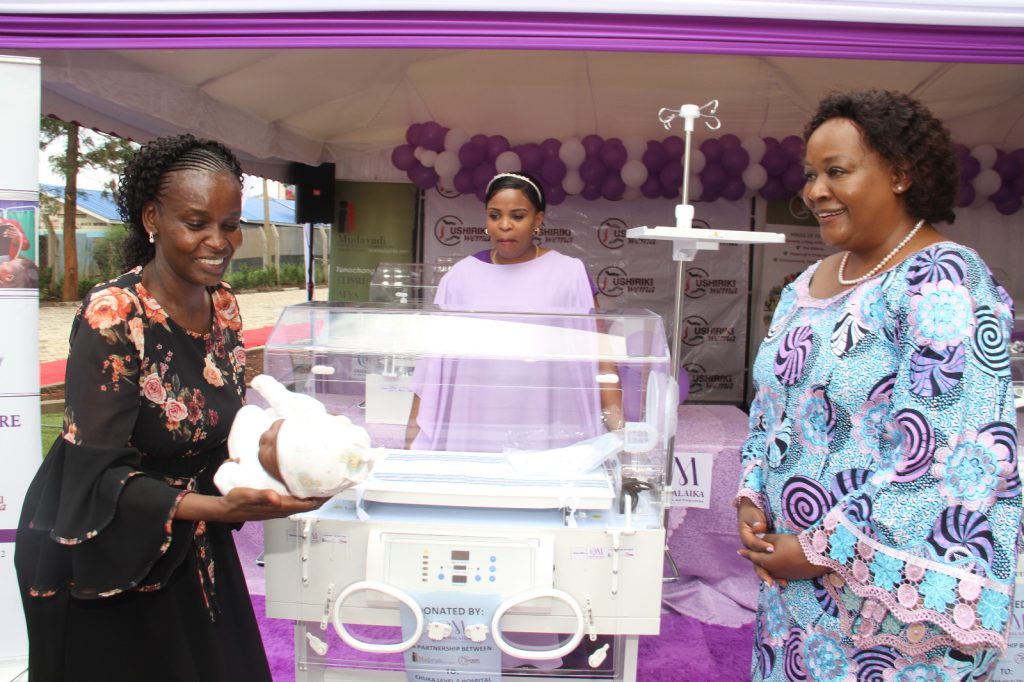
Tessie Musalia (right), spouse of the Prime Cabinet Secretary and Chairperson of Ushiriki Wema Foundation, and Margaret Muthoni (left), spouse of Muthomi Njuki, the Governor of Tharaka Nithi County, during the handover of a neonatal incubator under the Okoa Malaika Programme at Chuka County Referral Hospital
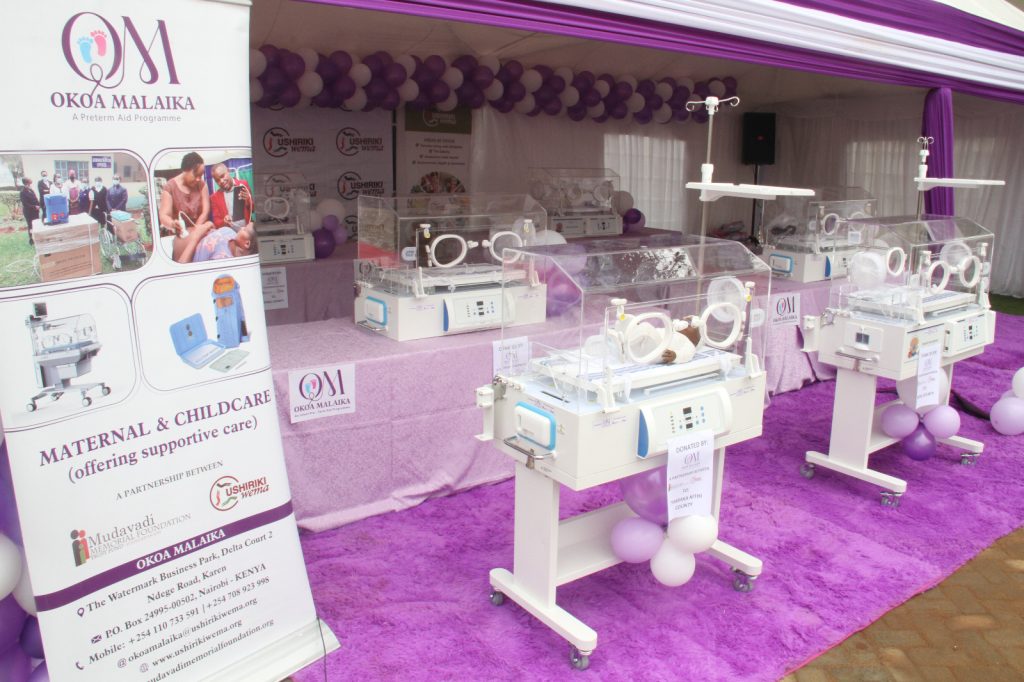
Health facilities in Tharaka Nithi, Embu and Meru counties have received six neonatal incubators aimed at improving care for premature and underweight newborns.
The equipment was donated on Sunday at Chuka County Referral Hospital by Tessie Musalia, spouse of the Prime Cabinet Secretary and Chairperson of Ushiriki Wema Foundation, through the foundation’s Okoa Malaika Programme.
The donation was made during celebrations marking International Women’s Day, with each of the three counties set to receive two incubators to strengthen neonatal care services.
Speaking during the event, Musalia said the programme seeks to reduce newborn deaths by ensuring hospitals are equipped with specialised equipment needed to support infants born prematurely.
She noted that the initiative, currently in its seventh phase, has so far benefited 28 counties across the country.
“Today, as we mark Phase Seven of our Okoa Malaika journey which has taken us through 25 counties, we are also celebrating International Women’s Day whose theme this year is Rights. Justice. Action. For All Women and Girls with the campaign theme Give to Gain,” she said.
Musalia said investing in women and children contributes to healthier families and stronger communities.
“The campaign reminds us that every investment we make in women and girls returns multiplied in healthier families, stronger communities and a more prosperous nation,” she said.
She observed that prematurity remains one of the major causes of newborn deaths globally, noting that limited neonatal intensive care units and equipment continue to challenge efforts to reduce infant mortality in Kenya.
Health statistics indicate that 4,112 newborns died out of the 20,156 under-five deaths recorded in health facilities in the country, with many of the deaths linked to inadequate neonatal care.
Musalia said most of the deaths could be prevented through timely and affordable medical interventions.
“Incubators play a crucial role in helping premature babies survive by providing the controlled environment necessary for their development,” she said.
A mother from Tharaka Nithi County, Daicy Makena, who delivered an underweight baby, said the availability of incubators in hospitals offers hope to parents whose newborns require specialised care.
She said the equipment gives fragile newborns a better chance of survival and recovery.
Musalia added that strengthening neonatal care also supports mothers who often face emotional strain when their babies require intensive medical attention.
“When we invest in infant incubators, we are not only saving newborn lives but also protecting mothers from preventable grief and strengthening families,” she said.
She further urged legislators to consider extending maternity leave for mothers who give birth prematurely, noting that the current 90-day maternity leave period may not be sufficient for mothers whose babies require prolonged hospital care.
During the event, Margaret Muthoni, spouse of the Governor of Tharaka Nithi County, welcomed the initiative, saying the donation will enhance maternal and newborn health services in the county.
She said partnerships between government institutions, community leaders and organisations are essential in improving healthcare outcomes.
“This is more than a donation; it represents hope and life-saving support for newborns and their families,” she said.
Musalia called on the government, private sector and development partners to increase investment in neonatal healthcare to ensure more hospitals are equipped to handle premature births.
“Giving is not charity; it is a strategic investment that helps build healthier communities and a stronger nation,” she said.